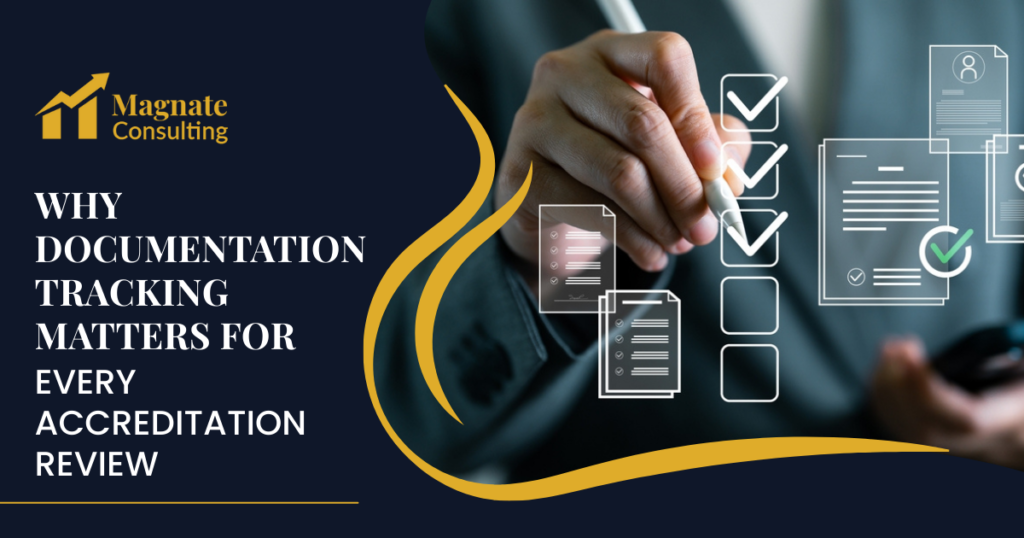
Accreditation reviews check how human-service agencies and group homes run their programs. These reviews focus on quality, safety, staff actions, and daily systems. Surveyors study records first because documents show how an agency operates each day. They want clear proof that staff follow rules at all times. For this reason, documentation tracking accreditation plays a major role in the review process.
Agencies must keep records current and consistent. Surveyors rely on these files to confirm daily practice. Even small gaps can raise questions. These gaps slow the review and may lead to findings. Strong documentation supports smoother operations because staff know what steps to follow and how to record them.
Clear files also support long-term compliance. Staff make better decisions when they access accurate information. Updated records keep teams aligned, which reduces errors and delays. As a result, agencies stay ready for surveys throughout the year. This steady readiness reduces stress and supports safer services for clients.
What Documentation Tracking Accreditation Really Means
Purpose of Documentation Tracking
Documentation tracking keeps records current and consistent. It ensures that files stay organized, complete, and easy to verify. Surveyors check these files to confirm that staff followed each step correctly. When entries are clear and accurate, the agency can show that staff actions match written procedures.
Staff depend on these records for daily decisions. Consistent entries guide actions and reduce confusion. As a result, teams stay aligned with standards. This alignment strengthens the agency’s overall performance.
How Tracking Supports Program Stability
Steady tracking reduces missing data. It also helps teams act based on updated information. When staff can access current records, they respond faster and with better clarity. This reduces mistakes and supports smooth delivery of care.
Tracking also prevents delays during audits or surveys. When documents stay updated, staff do not need to search for missing items at the last minute. This creates a more stable operation overall.
The Direct Impact of Documentation Tracking on Accreditation Reviews
Surveyors Start With Documents
Surveyors examine documents before anything else. Policies, logs, and staff files set the foundation for the entire review. Because of this, documentation tracking accreditation becomes essential. Surveyors expect these records to match real practice in every program area. Any gap between records and actions raises concern about consistency.
Accuracy and Timeliness
Records must be accurate and timely. Outdated files slow the review and may lead to findings. Incomplete entries raise questions about safety and oversight. Conflicting entries create even more issues because they show unclear practice.
Proper tracking prevents these problems. Teams update files on time, which keeps documents aligned with daily work. As a result, agencies face fewer repeat issues in later reviews.
Evidence of Consistent Practice
Clear documentation shows that staff follow rules each day. These records also support reliable operations across shifts. When surveyors see consistent entries, they gain confidence in the agency’s practices. Strong records show that the agency maintains steady care and compliance.
Key Areas Where Strong Documentation Tracking Matters
Client Records
Client records must stay complete and current. These files include assessments, care plans, progress notes, and incident reports. Each entry must show a signature and a time stamp. Follow-up notes also matter because they show how staff responded to each event.
When client records stay clear and updated, communication improves. Staff understand each client’s needs because information stays accurate. This supports safe care and strong service outcomes.
Staff Files
Staff files must include training logs, supervision notes, background checks, and current credentials. Surveyors check these items to confirm that staff meet required standards. Missing items raise concerns about safety and compliance.
Complete files also help managers track performance, training, and professional growth.
Policy and Procedure Updates
Policies must show correct version control. Staff must acknowledge updates so surveyors know they understand new rules. This helps confirm that staff follow the latest procedures.
Consistent policy tracking also reduces confusion across shifts and programs.
Safety, Health, and Facility Logs
Safety and facility logs support a safe environment. These logs include fire drills, medication records, and maintenance reports. Surveyors check these logs to confirm ongoing attention to safety. Clear entries help the agency show a strong history of monitoring and response.
Common Documentation Gaps That Slow Down Accreditation
Agencies face delays when documents are incomplete or outdated. Missing or outdated policies raise concerns fast. Incomplete incident follow-up creates more questions during the review. Staff files with expired credentials create serious findings tied to safety.
Training files with missing proof disrupt compliance checks because surveyors need evidence of staff skills. Logs with inconsistent entries weaken trust in daily operations. Poor organization also slows responses because staff must search for missing files.
These issues increase stress and lower confidence during surveys.
How Group Home Consulting Professionals Support Strong Documentation Tracking
Clear Structure for Records
Group home consulting professionals help agencies organize documents by standards and program needs. This structure reduces confusion and supports easier audits. When documents follow a clear system, surveyors navigate them with ease.
Staff Coaching
Consultants guide staff on correct filing steps. They show teams how to complete forms, update logs, and maintain files during busy days. Staff gain clarity and confidence because they understand what is required.
System Setup
Consultants also help build templates, forms, and record formats. Clear tools reduce errors and support consistent record entry. These tools help teams keep records updated with less effort.
How Audit Compliance Consulting Improves Documentation Tracking
Internal File Reviews
Routine internal audits help agencies find errors before surveyors find them. These reviews keep records in good condition throughout the year instead of only before a survey.
Standards Alignment
Consultants check each document against accreditation standards. This alignment helps agencies fix gaps early. With each audit cycle, compliance improves.
Preventing Repeat Issues
Consultants examine patterns from past findings. They help agencies solve recurring issues by adjusting training, workflows, or record formats. This prevents the same concerns from appearing in future reviews.
Role of Corrective Action Plan Consulting
Identifying the Root Cause of Documentation Issues
Consultants study why documentation issues continue across reviews. They look at workflows, training gaps, unclear duties, or missing oversight. This study helps identify the actual cause of recurring problems.
Building Solutions
Consultants create practical solutions. These may include updated training, workflow changes, or clearer responsibilities. These solutions improve how teams record their work.
Monitoring Progress
Consultants track progress until the issue is fully resolved. This oversight ensures that new improvements stay consistent and effective.
Best Practices for Reliable Documentation Tracking
Centralized Document Storage
A single storage system keeps records organized. Digital systems help with fast access. Well-organized binders work for agencies with smaller programs.
Daily or Weekly Updates
Short updates prevent large gaps. Staff save time when they update files right away. This routine also reduces errors.
Staff Accountability
Each staff member must know their duties. Clear roles improve accuracy in every file. This also reduces delays when questions arise.
Regular Internal Review Cycles
Scheduled checks help agencies catch errors early. These reviews support smoother audits and better compliance.
Clear, Simple Forms
Simple layouts reduce mistakes. Staff complete forms faster and with fewer errors. This supports better accuracy across all programs.
How Strong Documentation Tracking Lowers Accreditation Stress
Good tracking removes last-minute rushing. Staff feel more confident because records stay current. Survey days run smoothly with fewer findings. Clear files reduce anxiety and support a more positive review experience.
Year-round compliance also becomes easier. When documentation stays updated, agencies remain prepared for surprise reviews, licensing checks, or internal audits.
Conclusion
Documentation tracking accreditation supports safe care, organized operations, and ongoing compliance. Group home consulting professionals help teams build clear systems. Audit compliance consulting strengthens standards and reduces issues. Corrective action plan consulting addresses repeating problems and builds long-term solutions.
When agencies follow strong tracking practices, they support better outcomes, safer services, and smoother accreditation results.
Strengthen your documentation tracking for accreditation today. Get support from Magnate Consulting that improves compliance, reduces stress, and prepares your agency for every review with clear systems and organized records.
FAQs
1. Why is documentation tracking so important for accreditation?
Documentation tracking shows how an agency follows rules each day. Surveyors use these records to confirm safety, quality, and compliance.
2. What happens if records are incomplete during a review?
Incomplete records lead to questions, delays, and possible findings. These concerns can affect accreditation status.
3. How often should staff update documentation?
Teams should update records daily or weekly. Regular updates reduce errors and support consistent practice.
4. How can group home consulting professionals help?
They help organize records, guide staff, and design better systems for storing and updating documents.
5. What is the role of corrective action plan consulting?
It helps agencies fix recurring documentation issues. Consultants identify the cause, design solutions, and monitor progress.