5 Tips for Choosing the Right CARF Accreditation Consulting Partner

CARF accreditation is a major step for healthcare and human services organizations committed to quality, accountability, and person-centered care. The process requires more than completed paperwork it demands clear systems, trained staff, and confidence in how services are delivered every day. For many organizations, preparing for a CARF survey can feel overwhelming, especially while managing operations, staffing challenges, and regulatory responsibilities. This is why many providers seek accreditation readiness consulting to stay organized, reduce pressure, and prepare well before surveyors arrive. Choosing the right consulting partner matters. The guidance you receive can directly impact survey outcomes, staff confidence, and long-term organizational stability. Tip 1: Look for Direct Experience With CARF International Standards CARF standards have specific language, structure, and expectations that differ from other accreditation or compliance frameworks. A consulting partner with experience in CARF accreditation consulting should have direct, hands-on knowledge of these standards, not just general compliance expertise. A qualified partner should: Direct experience helps avoid misinterpretation and unnecessary revisions late in the process. Tip 2: Evaluate Their Track Record With Similar Organizations Not all CARF-accredited organizations operate the same way. Behavioral health programs, outpatient services, group homes, and community-based organizations each face different challenges. When evaluating a consulting partner, look for experience with: Relevant experience allows consultants to offer guidance that fits real operational conditions. Tip 3: Assess How They Support Your Team, Not Just Documentation CARF surveys involve interviews, observation, and discussion, not just document review. Staff need to understand their roles and explain daily practices clearly. A strong consulting partner helps by: Documentation matters, but staff readiness often determines how smoothly a survey goes. Tip 4: Ask About Their Approach to Survey Readiness Survey preparation should follow a clear, structured process. Ask potential consultants how they guide organizations from assessment to survey day. A strong approach usually includes: A structured method reflects strong accreditation readiness consulting and helps teams stay focused. Tip 5: Choose a Partner That Offers Ongoing Guidance Accreditation does not end when the survey concludes. CARF surveys often include recommendations that require follow-up, corrective actions, or additional documentation. The right partner provides support: Ongoing guidance supports long-term readiness and future reaccreditation efforts. Mistakes to Avoid When Choosing a Consultant Organizations sometimes rush the decision and face challenges later. Common mistakes include: Careful selection helps avoid unnecessary stress and delays. What a Strong CARF Accreditation Consulting Process Looks Like An effective consulting process is organized and collaborative. It typically includes: This approach supports consistency and confidence across the organization. How the Right Partner Reduces Survey Risk A qualified consulting partner reduces survey risk by: Preparation reduces uncertainty and improves outcomes. Signs You May Have the Wrong Consulting Partner You may need to reassess if: A strong partnership should feel steady, responsive, and practical. How the Right Partner Adds Long-Term Value Beyond accreditation, the right partner in CARF accreditation consulting helps organizations build systems that support quality and growth. Benefits often include: This is especially valuable for organizations involved in ongoing human services accreditation efforts. Conclusion Choosing the right CARF accreditation consulting partner is a strategic decision that affects more than survey results. The right support helps organizations prepare with clarity, reduce stress, and build systems that last beyond accreditation. By focusing on experience, team preparation, structured readiness, and ongoing guidance, healthcare and human services organizations can approach CARF accreditation with confidence and control. If your organization is preparing for CARF accreditation and needs experienced, steady guidance, Magnate Consulting is here to help. Our team supports readiness, preparation, and long-term quality improvement. Reach out today to get started. FAQs 1. What does a CARF accreditation consulting partner do? A consulting partner helps organizations interpret CARF standards, prepare documentation, train staff, and guide readiness before, during, and after the survey. 2. When should an organization seek CARF accreditation consulting? Many organizations seek support early in the preparation process, especially for first-time accreditation or when addressing prior recommendations. 3. Can consulting support help after a CARF survey? Yes. Consultants assist with responding to recommendations, corrective action planning, and strengthening systems for future surveys. 4. Is CARF accreditation consulting only for behavioral health programs? No. It supports a wide range of healthcare and community-based programs across healthcare and human services sectors.
9 Signs Your Business Needs Compliance Systems for Expansion

Expansion brings opportunity, but it also introduces new layers of regulatory and operational risk. As healthcare organizations grow into new locations, add services, or scale teams, compliance requirements increase alongside complexity. What worked for a single location or small operation often becomes unreliable during growth. Compliance systems play a key role in sustainable expansion. Without structure, organizations struggle to maintain consistency, respond to oversight requests, and manage accountability across teams. In many cases, expansion slows or stalls because leadership lacks confidence in compliance readiness. Many growing providers seek multi-state healthcare expansion consulting to manage regulatory variation and maintain control as they expand into new regions. Strong compliance systems for expansion help organizations grow with clarity instead of uncertainty. What Compliance Systems Mean for Growing Businesses Defining Compliance Systems Compliance systems are the frameworks that guide how an organization meets regulatory, legal, and internal requirements consistently. They are not limited to written policies alone. Effective compliance systems include: A strong system also includes policy development for healthcare expansion, ensuring expectations remain clear as services, locations, and teams grow. Why Expansion Demands Stronger Compliance Expansion increases exposure. Each new location, service line, or hire introduces additional oversight requirements and operational variation. Regulators often pay closer attention to growing organizations, especially those operating across multiple jurisdictions. Without systems, consistency becomes difficult. Teams interpret requirements differently, processes vary, and gaps appear during audits or inspections. Compliance systems provide structure so growth happens in a controlled, repeatable way. Sign 1: Compliance Feels Reactive Instead of Planned When compliance efforts begin only after an inspection notice arrives, it usually means systems are missing or incomplete. Teams scramble to collect records, update documents, and fix issues under pressure, often pulling attention away from daily operations. Reactive compliance creates long-term problems: Over time, this pattern increases stress, weakens confidence, and makes expansion feel risky rather than manageable. Sign 2: Policies Don’t Match Day-to-Day Operations Many organizations have written policies that appear thorough but do not reflect how work actually happens. Staff rely on informal processes or shortcuts to keep operations moving. This disconnect often leads to: As expansion continues, these gaps multiply, increasing exposure during inspections and reviews. Sign 3: Expansion Plans Depend on a Few Key People When compliance knowledge lives with only a few individuals, growth becomes fragile. Approvals slow down, questions bottleneck, and expansion depends on availability rather than structure. This situation increases risk because: Strong systems shift compliance knowledge from individuals to shared, documented processes. Sign 4: Documentation Is Scattered or Hard to Access As organizations grow, documents often spread across shared drives, emails, and personal folders. Locating the correct version becomes time-consuming and frustrating. Scattered documentation leads to: Centralized documentation improves access, accuracy, and response time, especially during expansion. Sign 5: New Locations or Services Increase Risk Expansion into new states or service areas introduces additional regulatory requirements, licensing rules, and reporting obligations. Existing processes may not scale smoothly to support this complexity. Common challenges include: This is where multi-state healthcare expansion consulting becomes valuable, helping organizations align requirements across jurisdictions while maintaining consistent internal standards. Sign 6: Audits and Reviews Cause Ongoing Stress Audits should not feel overwhelming every time they occur. Persistent anxiety, repeated findings, and last-minute fixes suggest system gaps. Warning signs include: Strong compliance systems replace uncertainty with predictability, helping teams feel prepared rather than pressured. Sign 7: Training Is Inconsistent or Informal Informal training may work in small teams, but breaks down as organizations grow. New staff often learn compliance requirements through observation or trial and error. This leads to: Consistent, role-based training tied to compliance systems supports clarity as responsibilities expand. Sign 8: Leadership Lacks Clear Visibility Into Risk When leadership lacks a centralized view of compliance status, issues surface too late. Decisions are made without full context, increasing risk during expansion. This lack of visibility can cause: Compliance systems provide structured reporting that supports informed decision-making and early intervention. Sign 9: Growth Is Slowing Due to Compliance Concerns If expansion plans are paused due to regulatory uncertainty, systems may not be ready. Hesitation to enter new markets often signals deeper compliance gaps. Common indicators include: Missed opportunities are a common result when structure does not keep pace with growth. How Compliance Systems Support Scalable Growth Creating Standardized, Repeatable Processes Compliance systems create consistency across teams and locations by establishing clear expectations. Standardized processes support: Consistency allows organizations to scale without constant oversight. Reducing Risk While Supporting Expansion Goals With systems in place, risks are identified earlier. Regular reviews and accountability improve audit outcomes and reduce disruption. Compliance systems for expansion help organizations grow with confidence instead of hesitation. Implementing Compliance Systems the Right Way Assessing Current Gaps and Risks Implementation begins with understanding where gaps exist. Internal reviews help identify weaknesses in documentation, training, and oversight. Prioritizing high-risk areas ensures effort is focused where it matters most. Building Systems That Grow With Your Business Effective systems are designed to evolve. This includes: Ongoing policy development for healthcare expansion ensures expectations remain aligned as regulations and operations change. Conclusion The nine signs outlined above often appear gradually, but they point to the same issue: growth has outpaced structure. Ignoring these signals increases risk, slows expansion, and places unnecessary pressure on teams. Strong compliance systems for expansion create stability during growth. Organizations that invest early gain consistency, clarity, and confidence as they scale. Building the right foundation allows healthcare organizations to expand with control, continuity, and long-term success. If your business is preparing to grow and compliance feels uncertain, Magnate Consulting can help. Our team supports organizations in building strong compliance systems that reduce risk and support confident expansion. Reach out today to get started. FAQs 1. What are compliance systems for expansion? Compliance systems for expansion are structured processes that help businesses manage regulations, documentation, training, and internal controls as they grow into new locations, services, or markets. 2. When should a business start building compliance systems for expansion? Businesses should begin building compliance systems before
What to Expect When Working With Audit-Ready Healthcare Consulting Experts
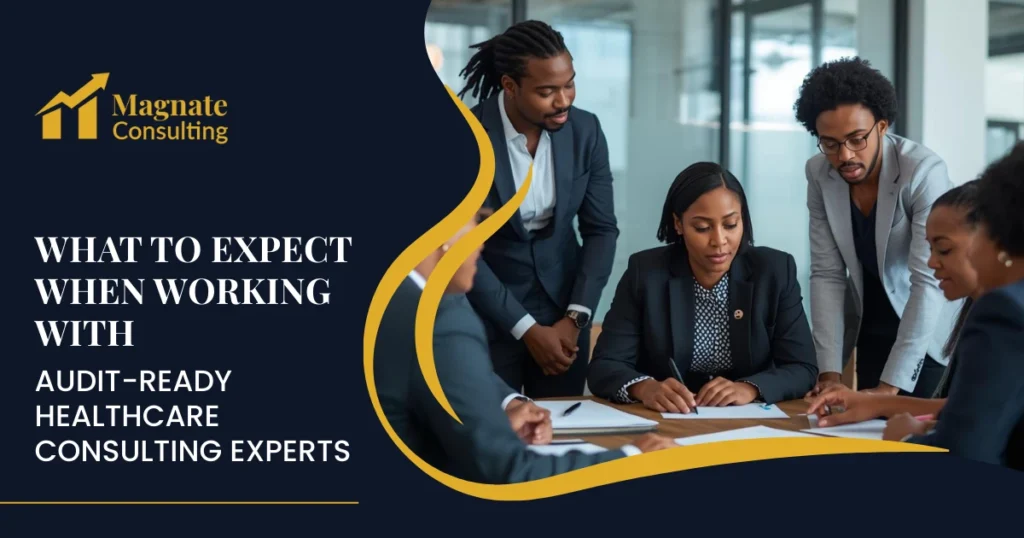
Regulatory pressure in the healthcare industry continues to increase. Federal agencies, state regulators, and accreditation bodies are conducting more frequent and more detailed audits, leaving little room for error. Healthcare organizations must now manage compliance alongside patient care, staffing challenges, and operational demands. Audit readiness matters more than ever because audits are no longer rare events. They are ongoing risks that can impact finances, reputation, and service delivery. Many organizations find themselves reacting to audit notices instead of staying prepared. This is where experienced healthcare consulting experts become valuable partners. Supported by structured healthcare compliance consulting, these experts help organizations reduce exposure, stay organized, and approach audits with clarity instead of stress. Understanding Audit-Ready Healthcare Consulting What Does “Audit-Ready” Mean in Healthcare Being audit-ready in healthcare means maintaining consistent compliance across clinical, administrative, and financial operations. It applies to how services are delivered, how records are maintained, and how billing and privacy standards are followed. Audit readiness includes: Key regulatory bodies include CMS, state health departments, and accreditation organizations. Unlike reactive audit preparation, which begins after an audit notice is received, proactive compliance focuses on staying prepared at all times. This approach helps organizations move away from last-minute fixes and toward steady, dependable systems. Who Are Audit-Ready Healthcare Consulting Experts These experts are professionals with deep knowledge of healthcare regulations and audit processes. Their backgrounds often include compliance leadership, regulatory advisory roles, or hands-on audit experience across multiple healthcare settings. They typically work with hospitals, behavioral health providers, outpatient clinics, home health agencies, and group homes. Many also support organizations offering healthcare startup consulting, particularly those preparing for licensing, first-time audits, or early-stage growth. Unlike general consultants, audit-ready specialists focus on identifying risk, improving systems, and preparing teams for real-world audit conditions. Initial Engagement and Assessment Process Pre-Engagement Discovery and Goal Setting The consulting process begins with understanding the organization’s current challenges. This phase includes discussions with leadership to identify risks, compliance concerns, and operational goals. Key steps often include: This alignment ensures expectations are realistic and focused from the start. Comprehensive Compliance Gap Analysis A detailed gap analysis follows the initial discussions. Consultants assess how current practices compare to regulatory requirements. This review often covers: The result is a clear roadmap showing where improvements are needed and which risks should be addressed first. Regulatory Standards and Frameworks They Address Federal and State Healthcare Regulations Audit-ready healthcare consulting experts help organizations manage complex regulatory requirements, such as: Rather than overwhelming teams, consultants focus on what applies to the organization’s specific services and payer mix. Accreditation and Quality Standards Many providers must also meet accreditation and quality expectations. Consulting support often includes guidance related to: Meeting these standards supports both audit readiness and overall service quality. Process Improvements and Operational Alignment Policy Development and Standardization Clear and current policies are essential for audit readiness. Consultants work with organizations to: This consistency helps staff follow expectations and reduces audit findings tied to process gaps. Internal Controls and Risk Mitigation Strategies Audit-ready healthcare consulting also focuses on preventing issues before they escalate. This includes: Strong internal controls reduce exposure and improve organizational stability. Staff Training and Organizational Preparedness Compliance Education and Training Programs Staff understanding plays a major role in audit outcomes. Consultants support teams through: Well-prepared staff respond more confidently during audits and inspections. Building a Culture of Audit Readiness Audit readiness works best when it becomes part of everyday operations. This requires leadership involvement, accountability, and open communication. Consultants help organizations build: A culture of readiness reduces fear and improves consistency. Technology and Data Support Leveraging Healthcare Compliance Technology Technology can simplify audit preparation and response. Consultants often assist with: These tools help teams work more efficiently and respond faster when audits occur. Data Analytics and Reporting Insights Data visibility strengthens compliance oversight. Consulting support may include: This insight allows leadership to address concerns early. Mock Audits and Readiness Testing Conducting Internal and External Mock Audits Mock audits are a key part of audit-ready healthcare consulting. These exercises simulate real audits by reviewing documentation, interviewing staff, and testing workflows. Mock audits help teams: Audit Response Planning Consultants also help organizations plan for real audit scenarios by: Clear planning reduces confusion and delays. Ongoing Support and Continuous Compliance Post-Audit Support and Remediation After audits, consultants assist with: This support reduces the risk of repeat findings. Long-Term Compliance Partnerships Many organizations choose ongoing audit-ready healthcare consulting to maintain readiness year-round. This long-term approach often includes regular risk reviews, policy updates, and advisory guidance. In this phase, healthcare compliance consulting plays an important role in keeping organizations aligned as regulations and operations evolve. Key Benefits of Working With Healthcare Consulting Experts Organizations working with experienced healthcare consulting experts often experience: These benefits extend beyond audits and support long-term organizational stability. How to Choose the Right Audit-Ready Healthcare Consultant Evaluating Experience and Industry Expertise When selecting a consultant, look for experience directly tied to healthcare audits, regulatory standards, and operational compliance. Firms with a strong track record in healthcare startup consulting are often well-suited to guide both new and established providers. Questions to Ask Before Hiring Before making a decision, ask: Clear answers help ensure a good fit. Conclusion Working with audit-ready healthcare consulting experts gives healthcare organizations a structured, practical approach to compliance and audit preparation. From early assessments to long-term support, these experts help providers stay prepared without unnecessary pressure. Proactive audit readiness is essential in today’s healthcare environment. Partnering with the right consulting experts allows organizations to focus on patient care while staying confident, organized, and prepared for audits ahead. If your organization wants clear guidance and steady compliance support, Magnate Consulting is here to help. Connect with our team today to build confidence, reduce audit risk, and stay prepared year-round. FAQs 1. What does this type of healthcare consulting include? It includes compliance assessments, policy review, staff preparation, mock audits, and ongoing support to help healthcare organizations stay prepared for regulatory reviews. 2. When should a healthcare organization hire consulting
Why Every Provider Needs Group Home Compliance Consulting
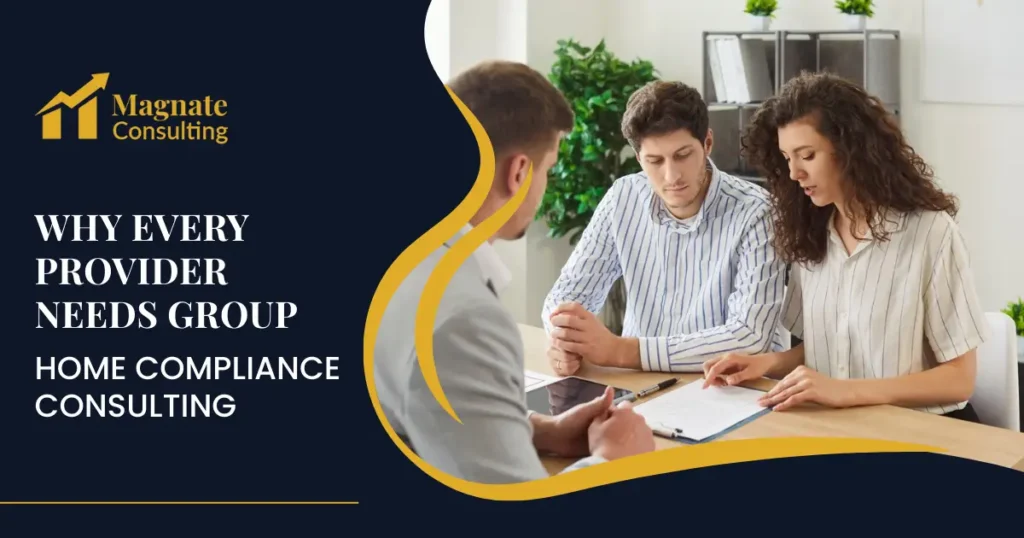
Running a group home is about far more than providing shelter and daily care. It is about protecting vulnerable individuals, meeting stringent regulatory standards, and operating a business that can withstand audits, inspections, and funding reviews. One missing policy, one incomplete staff file, or one unreported incident can put your entire operation at risk. That is why group home compliance consulting has become a critical part of staying licensed, funded, and trusted, including providers navigating group home compliance Virginia requirements that are often among the strictest in the region. Many providers start with the best intentions, yet struggle when regulations grow more complex. Without strong compliance systems, even well-run homes can face citations, payment delays, or shutdowns. Compliance consulting fills the gap between daily care and regulatory survival. The High-Risk Reality Of Operating A Group Home Group homes operate under constant oversight. State licensing agencies, Medicaid programs, and often accreditation bodies monitor everything from resident safety to staffing levels. These organizations are responsible for protecting people who rely on structured, supervised care, so they expect strict adherence to rules. This creates real risk for providers. A failed inspection can lead to: Even small issues can have serious consequences when they involve resident safety or documentation. Group home compliance consulting exists to reduce these risks by building systems that meet expectations before regulators arrive, especially in complex regulatory markets like group home compliance in Georgia. What Group Home Compliance Consulting Actually Includes Many providers think compliance is only about passing inspections. In reality, it is about creating a system that keeps your home safe, consistent, and defensible. This service covers areas such as: These systems create structure. They make sure everyone knows what to do, how to document it, and how to show proof when asked. Why Internal Teams Often Miss Compliance Problems Even dedicated staff can overlook compliance issues. Daily care, staffing challenges, and administrative work leave little time for constant regulatory review. Over time, small gaps appear. Common causes include: Group home compliance consulting provides outside oversight that sees what internal teams miss. Consultants bring a regulatory perspective that identifies risks before they turn into violations. How Compliance Consulting Prevents Violations Compliance failures rarely happen overnight. They develop when policies, training, and documentation drift out of alignment. Consulting services correct this through regular reviews, mock inspections, and system updates. This proactive approach: When these issues are corrected early, regulators never see them as violations. That keeps your record clean and your license secure. Protecting Your License And Funding Licensing and funding go hand in hand. Most group homes rely on Medicaid or state programs to operate. These agencies use inspection results to decide if payments continue. Group home compliance consulting supports this by: This stability is especially important for organizations that depend on Medicaid waiver compliance consulting to remain eligible for long-term funding and service authorizations. How Compliance Supports Resident Safety Regulations exist for a reason. They protect people who depend on group homes for stability and care. Compliance consulting strengthens safety by making sure: When compliance systems work, residents are safer, and families have more confidence in your program. Supporting Growth Without Regulatory Trouble Many providers want to grow. They want to open new homes, serve more people, or operate in new states. Growth adds complexity, and complexity increases compliance risk. Group home compliance consulting helps by: This allows organizations to expand without creating regulatory chaos. Who Benefits Most From Compliance Consulting Every group home can benefit, but it is especially valuable for: In all of these cases, compliance consulting provides stability during change. How Magnate Consulting Supports Group Homes Magnate Consulting partners with group home providers across the country to build strong compliance systems. From licensing and accreditation to audits and operational design, Magnate helps organizations stay compliant while they grow. Through structured reviews, policy support, and ongoing oversight, Magnate helps providers stay ready for inspections and confident in their operations. Conclusion Group home compliance consulting is not just about passing audits. It is about protecting your license, your funding, your staff, and the people you serve. In an environment where one mistake can shut down a program, having expert compliance support is no longer optional. It is the foundation of long-term stability and quality care. Keep your group home licensed, funded, and fully compliant with expert support from Magnate Consulting. Schedule your compliance review today and protect your operations before your next inspection. FAQs 1. What is group home compliance consulting? It is professional support that helps group home providers meet licensing, safety, and documentation requirements so they can pass inspections and remain in good standing with regulators. 2. How does compliance consulting help prevent violations? By reviewing policies, records, and operations, consultants identify gaps early and help organizations correct them before inspectors document them as violations. 3. Do new group homes need compliance consulting? Yes. New providers face complex licensing and startup requirements, and compliance consulting helps them get approved faster and avoid early mistakes. 4. Can compliance consulting protect Medicaid funding? Yes. Strong compliance systems support clean audits, which are required to maintain Medicaid and state program payments. 5. How often should a group home review its compliance? Most providers should conduct compliance reviews at least once a year, with additional checks after major staffing or program changes.
Why Healthcare Teams Rely on Workflow Optimization Consulting
Healthcare and human services teams operate under constant pressure. Every day brings high client volumes, urgent needs, strict documentation rules, and limited staff time. When systems are unclear or inefficient, small delays quickly grow into serious problems. Appointments run late, paperwork piles up, staff become overwhelmed, and clients feel the impact. This is why more organizations are turning to workflow optimization consulting to bring structure, clarity, and stability to their operations through effective operations systems design consulting that aligns people, processes, and performance. Well-designed workflows help teams move from task to task with purpose. They reduce wasted time, prevent errors, and create a smoother experience for both staff and the people they serve. The Reality Of Day-To-Day Healthcare Operations Most healthcare environments are complex. A single client interaction can involve intake staff, clinical teams, supervisors, billing, and compliance officers. Each step depends on the one before it. When even one part of the process is unclear or delayed, the entire system slows down. Common challenges include: Without organized workflows, teams spend more time fixing problems than delivering care. What Workflow Optimization Consulting Actually Does Workflow optimization consulting examines how work moves through an organization. It looks at how tasks are assigned, completed, reviewed, and documented. The goal is to remove friction and make sure every step supports the overall mission. This process typically includes: By redesigning workflows, organizations create systems that work for people instead of against them. Where Healthcare Teams Lose Time And Money Inefficient workflows quietly drain time and money. Staff may not realize how much effort is lost to poor systems until changes are made. Common problem areas include: Workflow optimization consulting identifies these pain points and replaces them with more direct, reliable processes. How Optimized Workflows Improve Patient And Client Care When workflows are clear, care improves. Staff know what to do, when to do it, and how to document it properly. This leads to faster service, fewer mistakes, and better coordination. Benefits for clients and patients include: A smoother system allows providers to focus on people instead of paperwork. Supporting Staff Performance And Retention Burnout is a major issue in healthcare and human services. Confusing processes and constant pressure make staff feel unsupported. When workflows are improved, work becomes more predictable and manageable. Optimized systems provide: When staff feel supported by the system, they stay longer and perform better. Connecting Workflow Design To Compliance And Quality Healthcare organizations must follow strict regulations. Documentation, reporting, and accountability are all part of compliance. Poor workflows often lead to missing or incorrect records, which creates risk. Strong workflow design supports: This is why process improvement consulting in healthcare plays such an important role in reducing compliance risk while improving operational performance. How Workflow Optimization Supports Growth Growth adds complexity. New locations, new programs, and higher volumes increase the number of tasks that must be coordinated. Without strong workflows, growth leads to confusion. Workflow optimization consulting helps organizations: This makes growth possible without losing control. Who Benefits The Most Many types of organizations rely on strong workflows, including: Any organization that handles high volumes of clients, documentation, and staff coordination gains stability through better process design. How Magnate Consulting Helps Teams Improve Operations Magnate Consulting works with healthcare and human services organizations to design systems that improve performance and long-term sustainability. By evaluating workflows, aligning processes with regulations, and supporting implementation, Magnate helps teams operate with clarity and confidence. These systems reduce friction, improve accountability, and support better outcomes across every department. Conclusion Healthcare teams depend on workflow optimization consulting because strong systems make everything else possible. When processes are clear and efficient, staff work better, clients receive better care, and organizations remain stable even under pressure. In a demanding industry, smart workflow design is the foundation of lasting success. Build stronger, smoother operations with Magnate Consulting. Schedule your workflow optimization consulting session today and create systems that support efficiency, compliance, and long-term success. FAQs 1. What is workflow optimization consulting? It is a service that reviews and improves how tasks, data, and communication move through an organization to reduce delays, errors, and wasted effort. 2. How does workflow optimization help healthcare teams? By simplifying processes and clarifying responsibilities, teams can deliver care faster, document more accurately, and reduce daily stress. 3. Can workflow optimization support compliance? Yes. Clear workflows improve documentation, reporting, and accountability, which are essential for meeting regulatory and quality standards. 4. Is workflow optimization only for large organizations? No. Clinics, group homes, and small agencies all benefit from structured workflows that support growth and consistency. 5. How long does it take to see results? Many organizations begin to notice improvements in efficiency and coordination within weeks of implementing optimized workflows.
Medicaid Waiver Startup Consulting Virginia: Step-by-Step Guide for New Providers
The Medicaid waiver system in Virginia supports community-based care and requires providers to follow strict rules from the start. New agencies often feel overwhelmed by policies, training standards, and operational expectations, so they seek structured guidance to avoid mistakes and delays. Compliance and readiness remain essential during each review because the state checks policies, staffing records, and daily operations before approving. Strong systems also support safe services and steady growth. For this reason, many entrepreneurs rely on Medicaid waiver startup consulting Virginia to gain clear direction, reduce confusion, and move through the setup process with confidence. Understanding Medicaid Waiver Requirements in Virginia Licensing and Regulations Virginia sets clear rules for all Medicaid waiver providers in Virginia, and each rule shapes how an agency must operate from day one. Providers must meet state licensing standards, follow service guidelines, and maintain organized records for every client. Core expectations include safe service delivery, proper staffing levels, and clear policies that match state requirements. Documentation plays a major role because the state reviews policies, training files, and operational plans during each step. Many new agencies use Medicaid waiver startup consulting Virginia at this stage so experts can help them prepare compliant files and avoid gaps that delay approval. The Provider Enrollment Process The enrollment process begins with meeting DMAS expectations for structure, staffing, and service readiness. Providers must submit required applications that outline their service plans, policies, and program structure. The state then reviews these items through assessments and formal approvals. Each review checks compliance, accuracy, and operational capacity. Agencies move forward only when every part meets state standards, so ongoing guidance through Medicaid waiver startup consulting Virginia helps reduce delays and build confidence. Step 1 Startup Readiness Consulting Business Structure and Planning Startup readiness begins with a solid business structure that supports Medicaid waiver services in Virginia. Each agency must register the business correctly and meet state expectations for oversight. After registration, the provider must create policies and procedures that fit service rules and show safe daily practice. These documents form the framework the state reviews before approval. A clear framework also guides staff and supports long-term compliance. Key tasks include: Preparing for State Reviews The next stage focuses on preparing for state reviews that confirm readiness. Readiness tools and checklists help providers organize required files. Internal audits also help catch issues early and correct them before submission. These steps reduce delays and support a smooth approval process. Startup readiness consulting helps new agencies stay organized and meet each requirement on time. Preparation steps include: Step 2: Medicaid Waiver Provider Setup in Virginia Service Models and Program Options Virginia offers several waiver programs, including CCC+, CL, and FIS. Each program serves different client needs, so providers must understand the service scope before choosing a model. New agencies must select a service type that matches their staffing, capacity, and long-term goals. A clear choice helps guide training, policies, and operational planning from the start. Key points include: Staffing and Training Requirements Virginia sets strict rules for staffing and training. Agencies must follow clear hiring policies to ensure safe service delivery. Background checks are required for all direct support roles. Staff must also meet competency standards before entering the field. A structured onboarding plan keeps training consistent and supports compliance. Provider tasks include: Step 3 Corrective Action Plan Consulting When a Corrective Action Plan Is Required A Corrective Action Plan (CAP) is required when the state finds compliance gaps during reviews, audits, or inspections. Common issues include incomplete policies, missing training files, and weak operational systems. These findings can delay approval if they are not corrected quickly. Agencies must act fast and address each issue clearly to move forward. Typical CAP triggers include: Building a Strong Corrective Action Response A strong CAP uses a root-cause approach to show how the issue occurred and how it will be fixed. Providers must update documents, revise procedures, and show proof of correction. The state expects clear, organized responses submitted on time. Key response steps include: Step 4 Operational Efficiency Consulting Strengthening Daily Operations Daily operations shape the quality of service and overall compliance. Providers must build a workflow that supports staff, clients, and administrative tasks. Strong scheduling and documentation systems help the agency stay organized. Good record management also helps during audits and reviews. Essential tasks include: Improving Long-Term Agency Performance Long-term performance depends on systems that stay strong over time. Routine audits help agencies find issues early. Ongoing consulting support also helps providers stay compliant as rules change. Better systems reduce errors and support steady service quality. Performance tools include: Step 5 Final Approval and Launch Support Preparing for Your First Clients Before serving clients, agencies must refine intake steps and risk-management plans. Billing setup is also important because clean claims keep revenue steady. Strong systems help new providers enter the field with confidence. Launch tasks include: Post-Launch Consulting Benefits Post-launch support helps agencies stay compliant as daily operations grow. Continued reviews improve efficiency and support long-term stability. Providers also gain guidance during expansion or staffing changes. Post-launch benefits include: Why Entrepreneurs Choose Medicaid Waiver Startup Consulting in Virginia Entrepreneurs choose consulting support because it helps them move through each stage with fewer delays. Clear direction keeps the process organized and reduces confusion during setup. Providers also see improved compliance because consultants guide them through policies, staffing standards, and documentation needs. With consistent support from Medicaid waiver startup consulting Virginia, agencies build a stronger foundation and enter the field with systems ready to support long-term growth. Conclusion This step-by-step consulting framework guides new providers from business structure to final approval. Each stage supports compliance, operations, and readiness, which remain essential in Virginia’s Medicaid waiver system. Professional consulting helps agencies avoid errors, follow state rules, and prepare for reviews with confidence. With the right support, new Medicaid waiver providers in Virginia start strong and maintain the stability needed to grow and serve clients effectively. Start your agency with confidence through expert Medicaid waiver startup consulting in Virginia
How Mock Audit Preparation Healthcare Protects Your License and Funding
In healthcare and human services, audits decide far more than paperwork. A single inspection can determine if your organization keeps its license, continues receiving Medicaid or grant funding, or faces restrictions that interrupt daily operations. One failed review can trigger months of oversight, payment delays, or even program shutdowns. That is why mock audit preparation healthcare is not a formality. It is one of the most important protections an organization can have, especially when supported by audit-ready healthcare consulting that keeps every department aligned with regulatory standards. When done correctly, mock audits expose weaknesses before regulators see them. That early insight allows leadership to fix compliance gaps, protect revenue, and avoid licensing actions that can take years to recover from. Why Audits Have The Power To Shut You Down Every licensed healthcare or human services organization operates under strict oversight. Regulators use audits to decide three critical things: Audits do not only review clinical care. They judge your systems. Inspectors examine how you document services, how staff are trained, how incidents are handled, and how leadership monitors risk. If those systems are weak, the organization is considered unsafe, even if the care itself is good. Mock audit preparation for healthcare helps you stay ahead of this risk by ensuring your systems match regulatory expectations before anyone outside your organization reviews them. What Regulators Are Really Looking For During audits, regulators are searching for evidence that your organization is: They are not impressed by good intentions. They want proof. That proof lives in files, reports, training logs, and daily procedures. Mock audit preparation for healthcare makes sure that proof exists, is complete, and is easy to verify. How Mock Audits Work In Real Practice A true mock audit recreates the experience of a real inspection. It does not just review paperwork. It evaluates how your organization actually functions, often through internal audit consulting healthcare that mirrors the way regulators think and operate. This includes: This process reveals issues that internal teams often miss because they are too close to daily operations. How Mock Audit Preparation In Healthcare Protects Your License Licensing agencies issue citations when they find violations. Enough citations can result in probation, conditional approval, or license suspension. Even minor findings can trigger follow-up inspections that add stress and cost. Mock audit preparation in healthcare prevents this by allowing you to correct problems before they become official violations. When inspectors arrive, they see a well-documented, organized operation that meets their standards. That reduces the risk of negative findings and helps protect your ability to continue operating without restrictions. How Mock Audits Directly Protect Your Funding Funding and compliance are inseparable. Medicaid, state programs, and insurers depend on audit results to decide if they can continue paying you. A failed or conditional audit often leads to: Mock audit preparation healthcare reduces this risk by keeping your compliance clean and defensible. When your organization passes inspections without serious findings, funders see stability. That stability keeps revenue flowing and protects your financial future. Why Documentation Matters More Than Most Providers Realize In audits, documentation is the evidence. If it is not written down, it did not happen in the eyes of regulators. Mock audit preparation healthcare ensures: This level of documentation makes it much harder for inspectors to issue damaging citations, especially when backed by strong policy and audit support consulting that keeps records current and defensible. The Risk Of Walking Into An Audit Unprepared Organizations that skip mock audits often assume things are fine. That confidence disappears quickly when inspectors start asking for files that cannot be found or policies that no one follows. The consequences include: Mock audit preparation healthcare avoids these crises by turning surprises into known, manageable issues. Why Ongoing Mock Audits Provide Long-Term Security Compliance is not fixed. Regulations change, staff turnover happens, and programs grow. A one-time review does not protect you year after year. Ongoing mock audit preparation healthcare keeps your organization aligned by: This creates true audit readiness, not last-minute scrambling. Who Benefits The Most From Mock Audit Preparation Healthcare Any provider that depends on licensing or public funding needs this protection, especially: These organizations operate in high-risk regulatory environments where even small errors can have large consequences. How Magnate Consulting Supports Compliance And Funding Security Magnate Consulting helps healthcare and human services organizations build and maintain compliance systems that protect their licenses and funding. Through mock audits, policy support, internal reviews, and corrective action plans, Magnate helps organizations identify and fix issues before regulators arrive. This proactive approach keeps organizations stable, confident, and prepared for every inspection. Conclusion Mock audit preparation healthcare is one of the most effective ways to protect your license and funding. By finding compliance gaps early and correcting them before inspections, your organization stays operational, financially secure, and ready for growth. In a regulatory environment where one audit can change everything, preparation is the difference between stability and crisis. Protect your license, funding, and reputation with mock audit preparation healthcare from Magnate Consulting. Schedule your compliance review today and stay confident, compliant, and ready for every inspection. FAQs 1. What is mock audit preparation healthcare? It is a simulated regulatory review that checks policies, records, staff readiness, and operations to identify compliance gaps before an official audit takes place. 2. How does a mock audit protect my healthcare license? By finding deficiencies early, organizations can correct issues before regulators document them as violations that could lead to penalties or license restrictions. 3. Can mock audits help prevent funding interruptions? Yes. Clean audit results support continued Medicaid, insurance, and grant payments by showing that the organization meets compliance standards. 4. How often should healthcare organizations conduct mock audits? Most providers benefit from at least one full mock audit per year, along with periodic compliance reviews to stay ready for unannounced inspections. 5. Who should conduct a healthcare mock audit? An experienced compliance consulting firm with regulatory knowledge should perform mock audits to ensure results reflect real inspection standards.
Home Care Agency Consulting: How to Avoid Startup Pitfalls
Starting a home care agency is like stepping into a dense forest with no map. You might see the path ahead, but every misstep, licensing delays, staffing shortages, or overlooked regulations can turn a promising vision into a costly detour. Many founders dive in with passion but discover too late that enthusiasm alone cannot substitute for preparation. This is where bold, strategic guidance from home care agency consulting becomes the difference between chaos and sustainable success. Launching a home care agency is not just about caring for clients; it is about creating systems that work even when no one is watching. Every policy, every staff schedule, every inspection-ready document contributes to the foundation of a thriving agency. Without it, you risk delays, compliance failures, and financial strain. Startup Pitfalls in Home Care Agencies and Solutions Even seasoned healthcare professionals often underestimate the challenges of starting a home care agency. Passion alone cannot compensate for gaps in planning, compliance, or operational systems. Below are the most common pitfalls and how home care agency consulting helps overcome them: These issues are not theoretical; they are real-world obstacles that home care agency startup consulting addresses before they become crises. The Role of Home Care Agency Consulting Consulting is not a luxury. It is a form of insurance against avoidable mistakes. Expert consultants provide guidance on licensing, compliance, staffing, and operations, creating systems that anticipate problems before they arise. Think of it as installing a GPS in that dense forest. You still have to walk the path, but now you know where the pitfalls are and how to navigate around them. Consultants offer: Founders gain confidence because the unknowns become manageable, not overwhelming. Navigating Licensing and Compliance Challenges Licensing is often the most stressful part of launching a home care agency. States like Virginia and Georgia have complex requirements, including staffing ratios, background checks, facility standards, and policy documentation. Common mistakes include incomplete applications, outdated policies, or misunderstanding inspection criteria. This is where experienced guidance from home care agency consultants near you proves invaluable. Consultants ensure your application is thorough, accurate, and aligned with each state’s expectations. They also help you prepare for inspections, reducing the risk of delays or corrective actions. For agencies seeking support, home care agency licensing in Virginia and home care agency licensing in Georgia consulting services streamline the process, making what often feels like an uphill battle into a guided, manageable journey. Building Strong Operational Systems Operations are the skeleton that supports every successful agency. Without structured systems, even the best intentions collapse under daily pressure. Consultants focus on: Studies in healthcare operations show that agencies with structured workflows have fewer compliance issues and higher staff satisfaction. Strong operational systems are not optional; they are the difference between reactive firefighting and proactive management. Financial Planning and Risk Management Budgeting for a home care startup is more than listing expenses. Hidden costs like liability insurance, training programs, and inspection preparation can quietly erode cash flow. Consultants guide founders through: Financial clarity is empowering. It allows founders to make decisions with confidence, rather than under stress or guesswork. Building and Retaining Your Team Even the best operational systems fail without reliable, competent staff. Consultants assist with: Inspections and client satisfaction both depend on a trained, confident team. Agencies that neglect staff preparation often face turnover, errors, and compliance gaps. Why Choose Magnate Consulting Not all consultants are created equal. Magnate Consulting offers national expertise that integrates licensing, compliance, and operational strategy. The advantage is clear: Their approach is comprehensive: home care agency compliance consulting, operational planning, and expansion readiness. Choosing Magnate Consulting transforms uncertainty into confidence, helping agencies build sustainable systems from day one. Conclusion Starting a home care agency is exciting but fraught with hidden risks. Licensing hurdles, operational gaps, financial missteps, and staffing challenges can derail even the most passionate founders. The key to avoiding these pitfalls is preparation, systems, and guidance from experts who know the terrain. With strategic home care agency consulting, agencies reduce risk, build compliant, scalable operations, and gain the trust of inspectors, staff, and clients. Magnate Consulting provides tailored startup consulting, licensing support, and operational systems. Book a consultation today to start strong. Frequently Asked Questions 1. How does consulting help new home care agencies? Consultants identify gaps in licensing, operations, and staffing before they become costly issues. They provide actionable guidance and systems that reduce stress and risk. 2. What are common licensing challenges in Virginia and Georgia? Errors in paperwork, misunderstanding staff ratio requirements, and incomplete policy documentation are frequent causes of delays during inspection. 3. How can operational systems reduce startup risks? Structured workflows for scheduling, payroll, documentation, and client care ensure smooth daily operations and compliance readiness, preventing mistakes before they happen. 4. How do consultants improve staff retention? Through recruitment strategies, practical training, and fostering a supportive culture, consultants help agencies maintain a motivated and consistent team. 5. What are the first steps in preparing for inspections? Review licensing requirements, implement compliant operational systems, train staff, and ensure documentation is accurate and accessible.
How HCBS Waiver Consulting Saves Your Program Time and Risk

Imagine staring at a stack of paperwork taller than your desk, each sheet representing rules, policies, and requirements for HCBS programs. One missed signature or incomplete policy could delay approval for weeks or even months. Many providers underestimate the complexity of HCBS waiver consulting, assuming it is just about filling forms correctly. But in reality, consulting transforms the process into a structured, confidence-building strategy that saves both time and risk. Consultants do more than check boxes. They build systems that anticipate inspection priorities, align policies with daily practice, and free staff to focus on what matters most: quality resident care. In short, expert guidance doesn’t just help your program survive inspection, but it helps it thrive. Understanding HCBS Waiver Complexity Home and Community-Based Services (HCBS) waivers provide essential support for individuals with disabilities, yet navigating them is far from simple. Each state has unique requirements, and federal guidelines add another layer of complexity. For instance, a new provider in Virginia must submit detailed staffing plans, safety protocols, and operational policies that adhere to the state’s HCBS rules. Meanwhile, providers in Georgia face slightly different regulations but equally stringent standards. Overlooking a single requirement can trigger delays, additional inspections, or even conditional approvals. This is why HCBS DD waiver startup consulting is invaluable. Consultants help providers anticipate regulatory nuances and create systems that comply with each state’s guidelines, preventing mistakes before they happen. How HCBS Waiver Consulting Streamlines Your Program The real value of HCBS waiver consulting lies in efficiency. Experts guide providers through a structured process, including: For new programs, HCBS waiver provider consulting services are often the first step. They assess your operational framework, identify compliance risks, and create a roadmap for inspection success. Risk Mitigation Through Expert Guidance Regulatory risk is a major concern. Errors in documentation, staffing ratios, or policy implementation can trigger audits, delay approvals, or even halt program launches. Experienced consultants know which areas inspectors focus on most, including incident reporting, staff training, and operational systems. They help providers anticipate and correct vulnerabilities, creating an environment that inspectors trust. For providers expanding across states, such as Virginia or Georgia, HCBS provider startup Virginia and HCBS provider startup Georgia consulting is critical. Consultants provide localized expertise that mitigates regulatory risk and ensures smooth approvals. External reference: For best practices in healthcare compliance and risk mitigation, see Health Affairs on healthcare program audits. Time Savings Through Proven Systems Time is one of the most valuable resources for HCBS providers. Structured consulting interventions create repeatable processes that accelerate application submission and reduce delays. These include: Providers using HCBS DD waiver startup consulting often see faster approval timelines because consultants anticipate bottlenecks that typically slow down first-time applicants. By implementing proven systems, programs operate more smoothly, allowing staff to focus on resident care rather than scrambling to meet deadlines. Operational Benefits Beyond the Application The benefits of consulting extend far beyond the approval of applications. Providers report: Group home licensing consultants emphasize that programs with strong operational systems perform better not just in inspections, but also in everyday operations. This approach fosters sustainability, allowing providers to scale confidently while maintaining compliance. Why Choose Magnate Consulting Not all consulting is the same. Magnate Consulting stands out because: Providers who work with Magnate Consulting don’t just prepare for inspections; they create organizations that inspectors trust. Whether you’re starting a program from scratch or expanding across states, Magnate Consulting ensures your operations, staff, and policies are aligned for success. Conclusion Expert HCBS waiver consulting transforms complex regulatory requirements into manageable, structured processes, saving your program both time and risk. By implementing proven systems, aligning staff practices with policies, and anticipating inspection priorities, providers can focus on delivering quality care rather than scrambling to meet compliance deadlines. With guidance from experienced consultants, your program not only survives inspections but thrives with confidence, consistency, and operational excellence. If you want to reduce risk, streamline approvals, and ensure your HCBS program runs smoothly, contact Magnate Consulting today for tailored HCBS waiver consulting and startup support. Frequently Asked Questions 1. How does HCBS waiver consulting reduce delays? Consultants help identify documentation gaps, align policies with practice, and prepare staff for inspections, ensuring faster approval timelines. 2. Can consulting support multi-state program expansions? Yes. Experts provide guidance for HCBS provider startup Virginia and HCBS provider startup Georgia, ensuring programs meet local regulations and avoid delays. 3. What is the difference between startup consulting and ongoing provider consulting? Startup consulting focuses on readiness and launch. Ongoing consulting ensures operational systems remain compliant and effective over time. 4. How do consultants train staff for inspections? Staff training covers procedural knowledge, policy application, and inspection readiness exercises, so staff are confident and consistent during audits. 5. Is consulting worth the investment for new programs? Absolutely. Providers save time, reduce risk, and build sustainable systems that prevent costly mistakes and compliance issues in the long run.
How Inspectors Evaluate Group Home Licensing Compliance

An inspection does not feel like a test until you are sitting across from someone holding a clipboard and asking questions that sound simple but land heavily. Most providers believe group home licensing compliance is about documents. Inspectors know better. They are reading the room, the systems, the people, and the story your organization tells without saying a word. Licensing reviews are designed to answer one quiet question. Can this organization safely care for vulnerable people, not just today, but months from now, when no one is watching? Understanding how inspectors evaluate compliance changes everything. It shifts preparation from panic to confidence. From paperwork to readiness. From hoping for approval to earning trust. What Compliance Really Means to Inspectors Compliance is not a checklist for inspectors. It is a pattern. They are trained to look for alignment. Policies that match behavior. Training that shows up in real decisions. Leadership that understands risk before it becomes an incident. Research in regulatory psychology studies shows that auditors rely heavily on consistency cues when evaluating high-risk environments like healthcare and residential care settings. When systems align, inspectors move faster. When they do not, scrutiny deepens. Group home licensing consultants help providers translate this understanding into actionable systems that inspectors recognize immediately. Group home licensing compliance is less about perfection and more about predictability. The Inspector’s Core Objective Inspectors are not there to help you succeed. They are there to protect residents. That mindset shapes everything. They evaluate whether your organization can identify problems early, respond appropriately, and prevent recurrence. They look for operational maturity rather than enthusiasm. This is why many first-time applicants struggle. Passion is visible. Systems are not. Inspectors want evidence that your group home can operate safely on its worst day, not just its best one. What Inspectors Review Before They Arrive Long before an inspection visit, your application is already speaking. Inspectors review submissions for internal logic. Dates, staffing ratios, program descriptions, and policies must agree with each other. Inconsistencies trigger questions. Missing details signal risk. They also compare your application against common failure patterns seen in group home startup consulting cases. Rushed submissions. Copy-pasted policies. Generic language that does not reflect the population served. When inspectors arrive, they already have a hypothesis. The inspection either confirms it or challenges it. Facility Readiness and Environmental Signals The physical environment tells a story that inspectors trust more than words. They observe safety features, cleanliness, accessibility, and resident flow. But they also notice subtler signals. Are emergency exits blocked? Are medications stored logically? Does the space feel lived in or staged? Environmental psychology research shows that inspectors unconsciously associate organized spaces with competent management. Disorganized environments increase perceived risk even if policies are strong. Group home compliance consulting often emphasizes these subtle cues in preparation programs. Policy and Documentation That Actually Matter Not all policies carry equal weight. Inspectors focus on documents that directly affect resident safety and rights. Incident reporting. Medication management. Staff supervision. Emergency response. They compare written policies to actual practice. If a policy says one thing and staff behavior shows another, the policy becomes evidence against you. This is where group home compliance consulting provides value. Strong providers write policies that mirror daily operations rather than aspirational language borrowed from templates. Inspectors can tell the difference within minutes. For guidance on incident procedures, refer to incident reporting best practices. Staff Knowledge and Confidence Inspectors rarely rely solely on leadership interviews. They speak with frontline staff because staff responses reveal training quality, role clarity, and organizational culture. Hesitation, conflicting answers, or vague explanations raise concern. Research in healthcare compliance auditing shows that staff confidence correlates strongly with inspection outcomes. Not confidence from memorization, but confidence from lived practice. If staff understand why procedures exist, not just how to recite them, inspectors relax. Resident Care and Rights Protection Inspectors pay close attention to how dignity shows up in daily routines. They observe interactions. Privacy practices. Communication tone. Complaint handling. Even small moments like knocking before entering a room matter. Group home licensing consultants ensure residents’ rights are embedded in daily operations, not just written policies. Documentation supports this, but behavior proves it. Operational Systems Under Scrutiny This is where many providers underestimate the inspection. Inspectors examine medication logs for accuracy and patterns. They review emergency drills not just for completion, but for realism. They assess supervision structures to see if accountability exists beyond job titles. Operational systems are the backbone of compliance. Without them, even experienced providers struggle during inspections. This is why group home business consulting increasingly focuses on systems design rather than surface-level preparation. Signals That Build Inspector Confidence Certain signals consistently shorten inspections. Organized records that can be accessed without stress. Staff who answer calmly and consistently. Leadership that acknowledges limitations without defensiveness. Inspectors trust organizations that understand their own risks. Transparency builds credibility faster than overconfidence. Confidence comes from thorough preparation, not last-minute performance. Red Flags That Trigger Deeper Review Inspectors are trained to notice patterns that suggest instability. Over-rehearsed answers. Missing logs. Policies that feel disconnected from reality. Leadership that speaks while staff remain silent. Another red flag is rushing. Providers who push for approval before systems are ready often face delays or conditional licensing. Group home licensing consultants help identify these red flags before the inspection ever begins. How Inspectors Make Final Decisions Inspection findings are weighted. Some issues require correction plans. Others delay approval entirely. Inspectors evaluate whether problems are isolated or systemic. They ask themselves whether this organization learns from mistakes or repeats them. Approval is not the end of evaluation. It is the beginning of ongoing oversight. Why Choose Magnate Consulting Magnate Consulting helps providers navigate group home licensing with expertise in compliance, operations, and growth. Their group home consulting services build trust with inspectors and create lasting organizational confidence. Conclusion Group home licensing compliance is not a performance. It is a reflection. Inspectors evaluate what exists when no one is watching. They look for systems that protect residents,