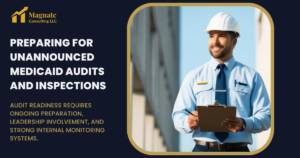
Providers should expect increased unannounced inspections and record reviews as federal and state agencies strengthen Medicaid oversight efforts.
Organizations that wait until inspectors arrive often discover compliance gaps too late.
Audit readiness requires ongoing preparation, leadership involvement, and strong internal monitoring systems.
What Auditors Commonly Review
Regulators may request:
- Service documentation
- Billing records
- Staff credentials
- Training files
- Incident reports
- Medication records
- Staffing schedules
- Policy manuals
- Supervision documentation
- QA/QI reports
Audits frequently involve cross-referencing records from multiple departments.
Common Audit Findings
Providers often struggle with:
- Missing documentation
- Expired credentials
- Incomplete incident follow-up
- Billing inconsistencies
- Inadequate staff training
- Poor supervision tracking
- Weak quality assurance systems
Why Leadership Oversight Matters
Compliance is not solely the responsibility of frontline staff.
Leadership teams must actively:
- Monitor compliance trends
- Review audit findings
- Implement corrective actions
- Track staff accountability
- Strengthen operational oversight
Regulators increasingly expect documented leadership involvement.
Creating an Audit-Ready Organization
Establish Internal Audits
Routine internal reviews help identify deficiencies before regulators do.
Strengthen Staff Training
Staff should understand documentation, incident reporting, confidentiality, and billing expectations.
Maintain Organized Records
Disorganized documentation slows audit responses and increases risk exposure.
Track Corrective Actions
Organizations should maintain documented evidence of improvement efforts.
Next Steps for Providers
- Conduct mock inspections
- Review staff files and credentials
- Audit incident management systems
- Evaluate QA/QI processes
- Organize compliance documentation
- Review leadership oversight practices
- Retrain staff on compliance requirements
How Magnate Consulting Helps Providers Prepare
Our team supports providers through:
- Mock audits
- Compliance readiness reviews
- Documentation evaluations
- Corrective action planning
- Staff training programs
- Risk management assessments
FAQs
1. Can Medicaid audits happen without notice?
Yes. Many inspections and investigations occur without advance warning.
2. What records should providers organize first?
Documentation, billing records, staff credentials, and incident reports should be prioritized.
3. Are leadership teams reviewed during audits?
Yes. Regulators often evaluate leadership oversight and quality assurance involvement.
4. What is a mock audit?
A mock audit simulates a regulatory review to identify compliance gaps.
5. How can providers reduce audit risk?
Strong documentation, routine internal audits, and staff training significantly improve preparedness.